
By Montazir Abidy, Co-founder, Diggit Software Solutions · Published November 2026
Quick answer: Agentic commerce is shopping where AI agents do some or all of the work for the buyer: finding products, comparing options and, in some cases, completing the purchase. Big companies are building the rails for it, but real agent-made purchases are still rare. For a small online store, the practical step now isn't rebuilding checkout. It's making sure your product information, policies and order updates are clear enough for both AI agents and people to use, and that your own store can answer questions instantly.
Agentic commerce in plain English
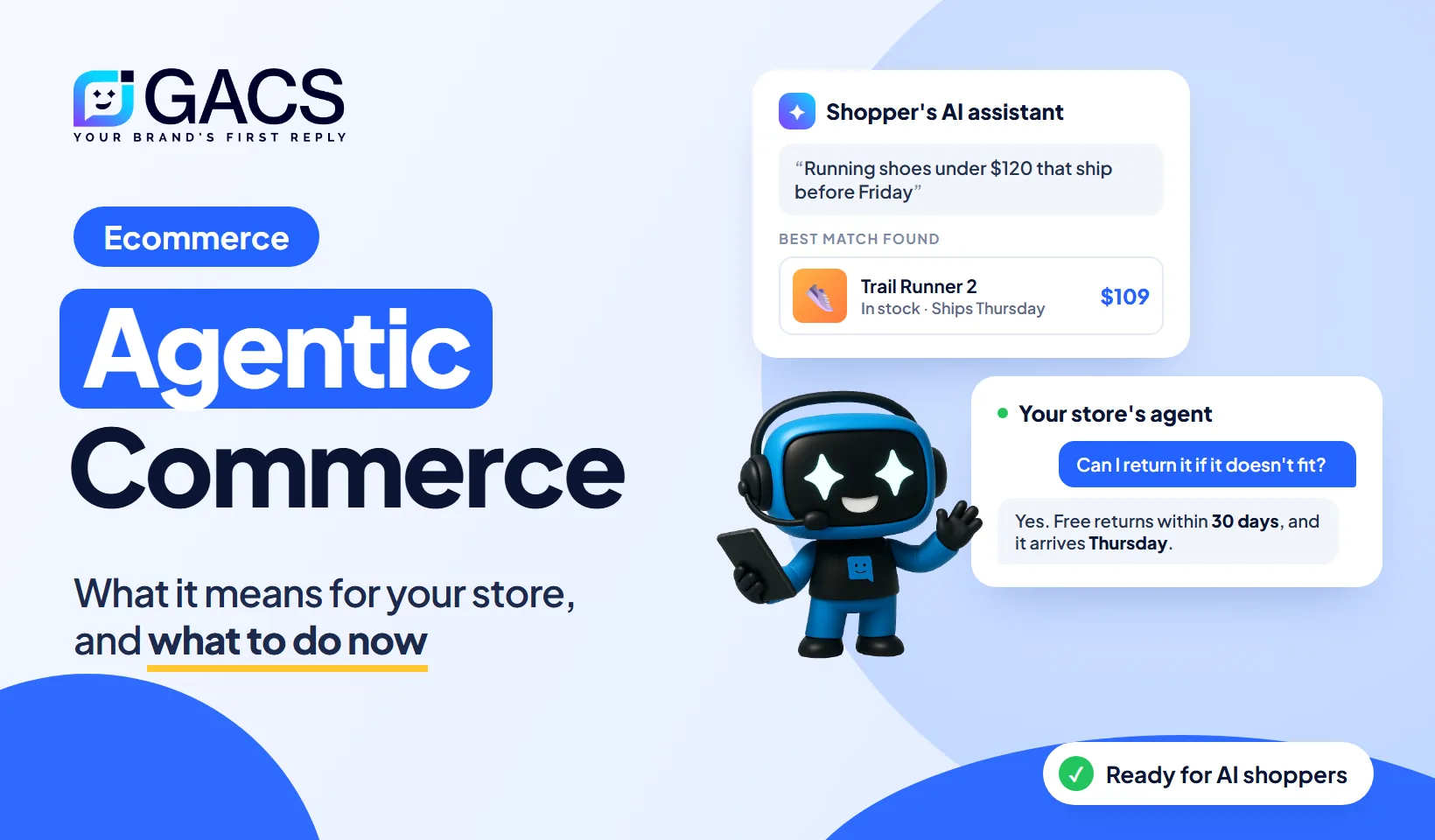
Today, a shopper searches, clicks through stores, compares and checks out. In agentic commerce, the shopper tells an AI assistant what they want ("running shoes under $120 that ship before Friday") and the assistant does the searching and comparing. Sometimes it also completes the purchase, with the shopper's approval.
There are two kinds of agent in this picture:
| The shopper's agent | Your store's agent | |
|---|---|---|
| Who runs it | An AI assistant the shopper uses | You |
| What it does | Finds, compares, sometimes buys | Answers questions, checks orders, helps people buy |
| What you control | Only the information you publish | Almost everything |
Most coverage talks about the first kind. For a small store, the second kind is where you can act today.
What's actually been built
Three developments matter most:
- Agentic Commerce Protocol (ACP). An open standard developed by Stripe and OpenAI that lets AI agents check out with a business. OpenAI's ChatGPT was the first AI platform to use it. Merchants stay the merchant of record and decide which transactions to accept.
- Universal Commerce Protocol (UCP). A standard Google co-developed with Shopify, Etsy, Wayfair, Walmart and Target, announced in January 2026 with more than 20 retailers, platforms and payment companies behind it. Google says it will power buying inside AI Mode in Search and the Gemini app.
- AI traffic to stores is growing fast. Adobe reported that traffic from generative AI sources to US retail sites rose 693.4% in the 2025 holiday season compared with the year before.
What's actually happening
The rails exist. The traffic is mostly shoppers researching, not agents buying.
In early November 2026, Fortune reported what large companies told investors:
- Uber said outside AI agents booked 4 rides and 500 Uber Eats deliveries in the week of Halloween, out of 320 million total.
- DoorDash said agents had produced "maybe several hundred orders in total."
- Airbnb said agent bookings were a "very non-material number" out of nearly half a million bookings a day.
So shoppers are using AI to research and decide, then buying on the store's own site. That's the part you can prepare for now.
What a small online store should do this quarter
1. Make your product pages complete and consistent
An AI assistant can only recommend what it can understand. For every product, publish:
- A clear title and description in plain language
- Price, sizes, colors and stock status
- Shipping times and costs
- The same details on your site, your marketplace listings and your product feed
2. Publish your policies where anyone can find them
Returns, exchanges, shipping and warranty in plain text, not only in a PDF or image. Shoppers ask about these before buying, and AI assistants look for them too.
3. Answer questions on your own site, instantly
Shoppers who arrive from an AI assistant have already done their research. They usually have one or two questions left: "Will it arrive by Friday?", "Can I return it if it doesn't fit?". If nobody answers, they leave. An AI agent on your own store can answer from your real product, policy and order data, any time of day.
4. Make "where is my order?" easy
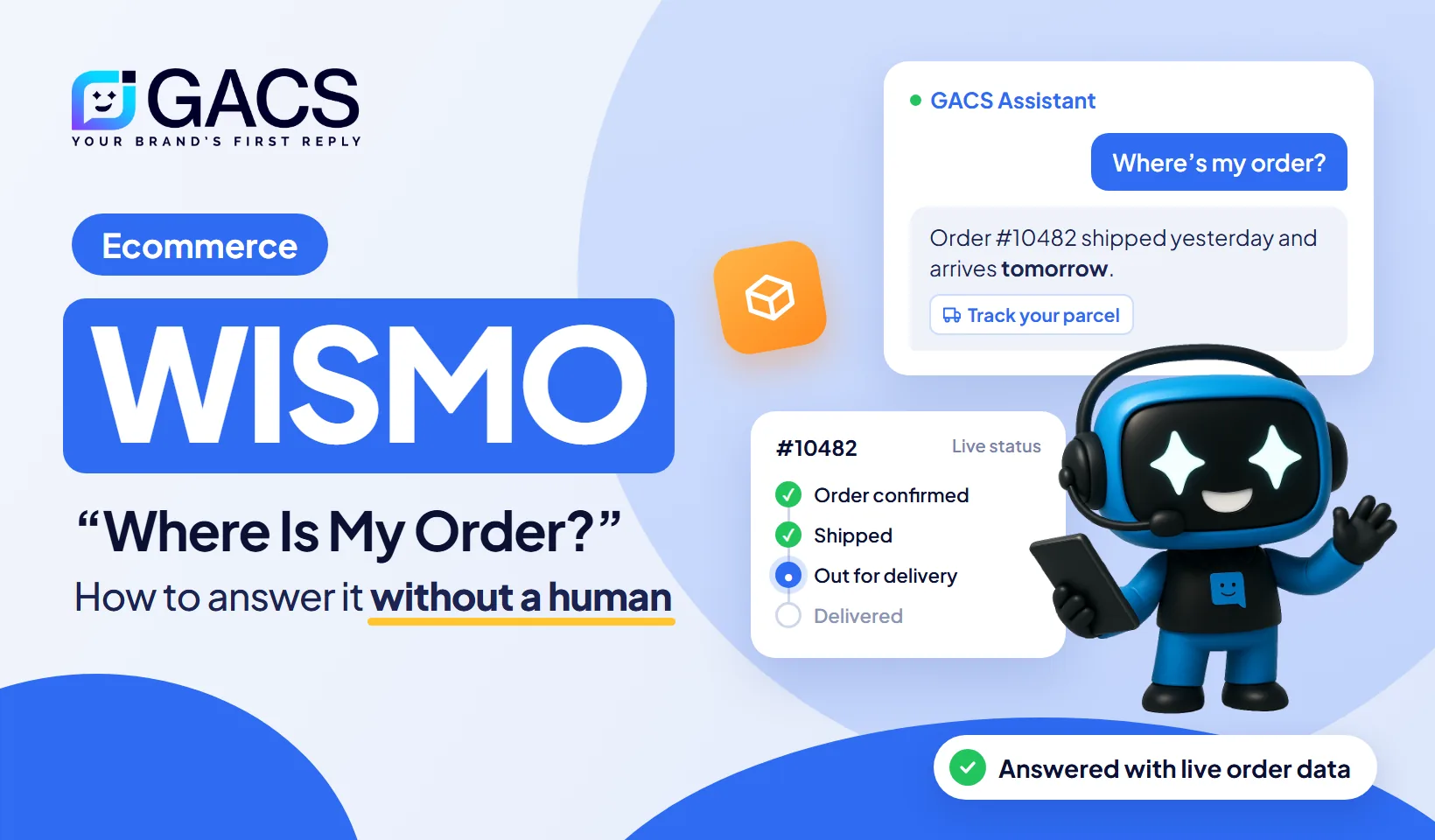
After the sale, the most common question is about delivery. Answer it with live order data on chat and WhatsApp. Our guide to WISMO covers how.
5. Keep a person in the loop
Shoppers want automation for simple things and a human for problems. In a Gartner survey of 3,566 customers, 87% said companies using GenAI for customer service must provide access to a human agent.
6. Watch your platform's agent features
If you're on a major platform such as Shopify, check what it offers for AI shopping channels before building anything yourself. The protocols are new and still changing.
Agentic commerce checklist
- Every product has a complete, plain-language description, price and stock status
- Shipping times and costs are on every product page
- Return and shipping policies are published as plain text
- Product details match across your site, feed and marketplaces
- Your store answers product and order questions instantly on chat and WhatsApp
- Problems and upset customers go straight to a person
- You check your platform's AI shopping options once a quarter
Where GACS AI fits
GACS AI is an AI customer service agent for online stores, the store's agent in the table above. It answers product and policy questions from your store's own content on your website chat, WhatsApp and voice, and answers "where is my order?" with live order data through its direct Shopify connection. It answers in more than 50 languages, says when it doesn't know instead of guessing, and hands over to your team with the conversation attached.
Book a demo and ask it the questions your customers ask.
Related questions
What is an example of agentic commerce?
A shopper asks an AI assistant to find a product within a budget and delivery date, the assistant compares options, and, with the shopper's approval, completes the purchase.
How big is agentic commerce?
Still small in actual purchases. In November 2026, Uber, DoorDash and Airbnb all told investors that agent-made orders were a tiny share of their totals. AI-driven research traffic to stores is growing much faster.
Do small online stores need to prepare for agentic commerce?
Yes, but the first steps are basic: complete product information, clear policies, and fast answers to customer questions on your own site.
About the author: Montazir Abidy is co-founder of Diggit Software Solutions, the company behind GACS AI. He leads business development and product strategy across Diggit's products.